Choosing The Right Fence Height And Style For Commercial Properties
A fence does a lot of heavy lifting on a commercial property. It defines your boundary, deters unauthorised access, meets council requirements and — whether you intend it to or not — shapes the first impression your site makes on visitors, clients and the public.
Choose the wrong height or style and you're either under-secured, non-compliant or presenting a streetscape that works against your brand.
This guide walks through the key considerations for selecting the right
fencing in Darwin commercial properties need, from security expectations and industry-specific requirements through to materials, aesthetics and compliance.
Why Commercial Fencing Is Different to Residential
The stakes are higher on a commercial site. You're protecting plant, equipment, stock and data — often across a larger footprint, with more people coming and going. Fencing decisions need to account for after-hours security, public liability, insurance requirements and in some cases specific regulatory standards that simply don't apply to a residential fence.
A height or style that works for a suburban home rarely translates to a warehouse, school or retail complex. The starting point for any commercial fencing decision is understanding what you're actually trying to achieve — and what your site demands.
Security Requirements Vary by Industry
Not every commercial property carries the same risk profile, and your fencing should reflect that. A medical centre has different priorities to a construction yard.
A primary school has different requirements to a logistics depot.
As a general guide:
- Warehouses & industrial sites — typically require higher, robust fencing (1.8m–2.4m or above) with minimal climb points and strong anti-intrusion features
- Retail & commercial precincts — often balance security with visual appeal; fencing that looks inviting during trading hours but deters access after hours
- Schools & childcare centres — fencing must prevent unsupervised exits as much as unauthorised entry; height, gate configurations and sight lines all matter
- Office complexes — perimeter definition and access control are priorities, often with a premium on professional presentation
- Construction & temporary sites — practical, relocatable options that meet site safety obligations without permanent installation
Understanding Fence Height Requirements
Height is one of the first decisions — and one of the most regulated. Commercial fence heights in the Northern Territory are subject to local council planning requirements, and getting it wrong can mean costly rectification work or approval delays.
Beyond compliance, height selection should factor in:
- The nature of what you're protecting — higher value or higher risk sites warrant greater deterrence
- Whether the fence borders a public space, road or neighbouring property
- Sight lines for security cameras or guard positions
- The type of fencing material — some styles provide effective deterrence at lower heights than others
When in doubt, engaging a fencing contractor who understands local Darwin council regulations saves significant time and avoids the need to revisit the work.
Popular Commercial Fencing Styles and Where They Work Best
Selecting the right style means matching the fencing's strengths to the demands of the site. Each material and profile has trade-offs between security, cost, maintenance and presentation.
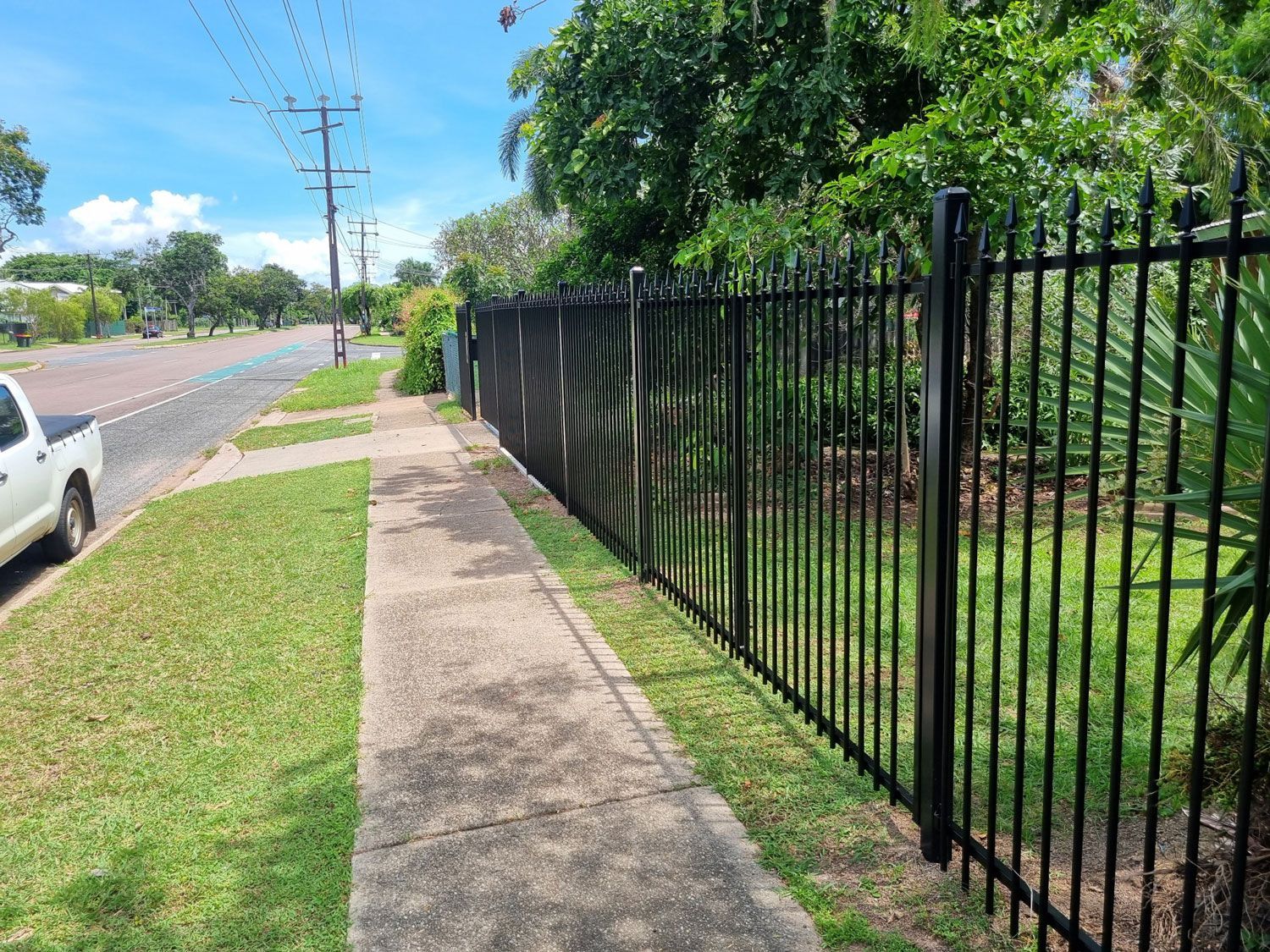
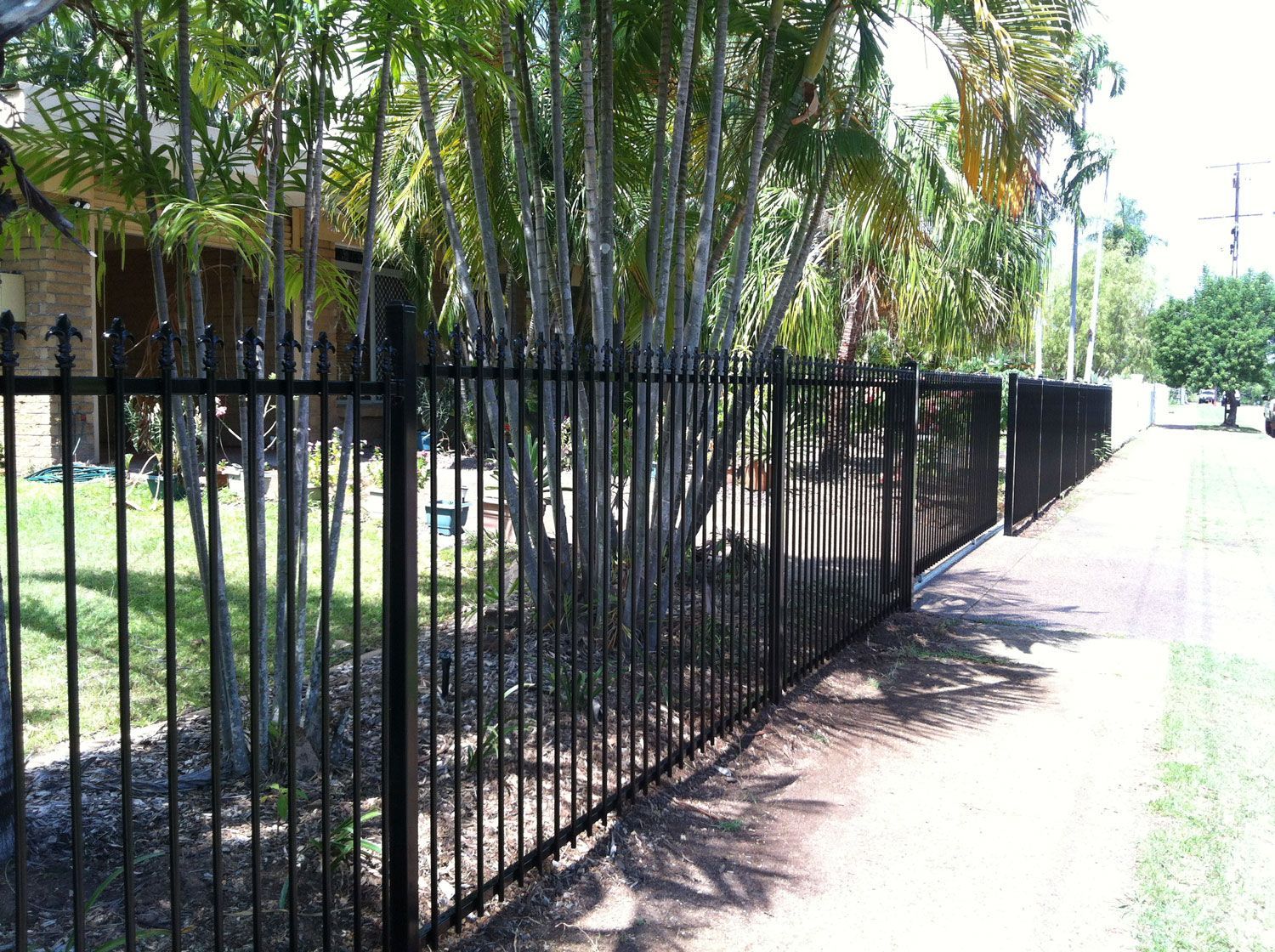
Steel palisade fencing is a go-to for high-security commercial and industrial sites. The vertical pale design makes climbing difficult, and the pointed or cranked tops add a strong visual deterrent. It's durable, long-lasting and suits sites where security is the primary concern over aesthetics.
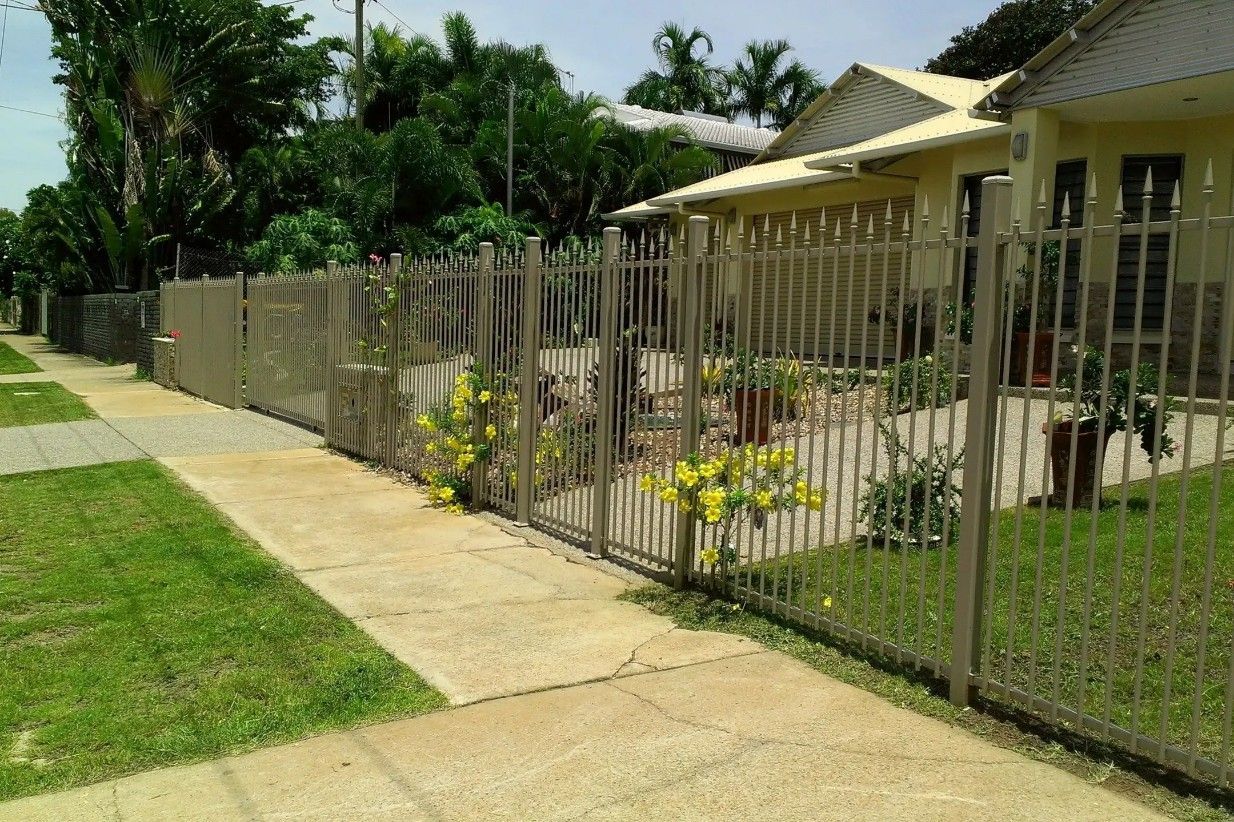
Aluminium slat fencing offers a cleaner, more modern look while still providing solid perimeter definition. Popular with office precincts, retail centres and mixed-use developments, it holds up well in Darwin's climate and requires minimal maintenance compared to steel alternatives.
Chain mesh fencing remains one of the most cost-effective options for large perimeters where visibility and airflow are acceptable. Common on construction sites, sports facilities and industrial yards, it's practical and fast to install — though it offers less privacy and a more utilitarian appearance.
Decorative security fencing bridges the gap between function and presentation. Powder-coated aluminium or steel in a range of profiles allows commercial properties to maintain a professional streetscape without compromising on security fundamentals. Well-suited to schools, healthcare facilities and commercial buildings with public-facing frontages.
Access Control and Gate Integration
A fence is only as effective as its entry points. For commercial properties, this means thinking carefully about how gates, boom gates, intercom systems and electronic access control integrate with the fencing solution from the outset — not as an afterthought.
Key access considerations include:
- Volume of vehicle and pedestrian traffic throughout the day
- Whether after-hours access needs to be restricted or managed remotely
- Emergency egress requirements, particularly for schools and healthcare sites
- Integration with existing CCTV or security monitoring systems
Designing gates and access points as part of the fencing solution — rather than retrofitting later — produces a more secure and cost-effective outcome.
Durability in Darwin's Climate
Darwin's tropical climate presents specific challenges that influence material selection. High humidity, monsoonal rainfall, UV exposure and salt air (particularly for coastal or near-coastal sites) accelerate corrosion and material degradation if the wrong products are specified.
For commercial fencing Darwin properties in this environment, powder-coated aluminium and galvanised or Zincalume-treated steel offer significantly better longevity than untreated alternatives. Specifying materials rated for tropical or coastal conditions upfront avoids premature replacement and ongoing maintenance costs.
Balancing Compliance, Function and Presentation
The best commercial fencing outcomes come from treating height, style, material and access as a single decision — not a series of separate ones. A fence that meets the height requirement but clashes with your building's presentation, or one that looks great but fails on durability, creates problems down the track.
Working with an experienced local contractor who understands Darwin's planning environment, climate demands and the specific requirements of your industry is the most reliable way to arrive at a solution that performs long-term.
Talk to the Team About Fencing Darwin Commercial Properties
We at Fence Factory work with commercial property owners, developers, facility managers and builders across Darwin and the surrounding region. Whether you're securing a warehouse, upgrading a school perimeter or fencing a new commercial development, we assess your site's specific requirements and recommend solutions that meet compliance, suit the climate and stand up to the demands of the property.
Contact us today to discuss your project and get practical advice on the right fencing Darwin commercial solution for your site.